


Understanding different truck tanker truck types is critical for safe and compliant transportation of fuels, chemicals, gases, and bulk materials. Each tanker is engineered with specific pressure ratings, materials, and structural designs to handle different cargo safely under Department of Transportation (DOT) regulations.
In modern loading terminals, equipment such as truck loading systems and engineered loading platforms work together with these tanker trucks to ensure controlled, safe, and efficient transfer operations. Selecting the correct truck tanker truck types directly impacts safety, efficiency, and regulatory compliance.
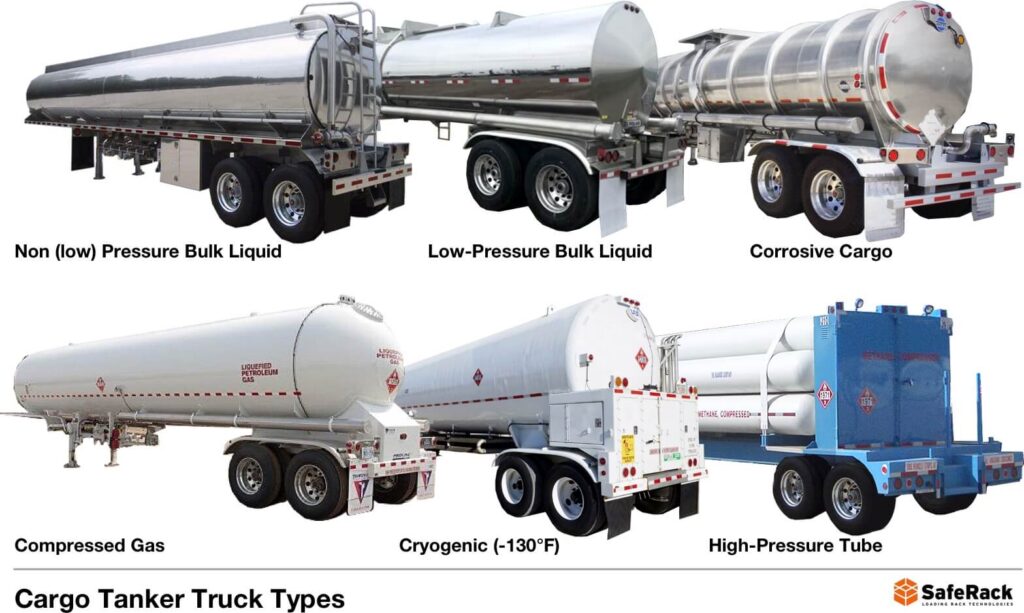
Main Truck Tanker Truck Types
Different truck tanker truck types are designed based on pressure, cargo type, and operational requirements.
JUMP TO SECTION
1. Non-Pressurized Liquid Tank (MC-306 / DOT-406)
This is the most commonly used tanker for fuel transport.
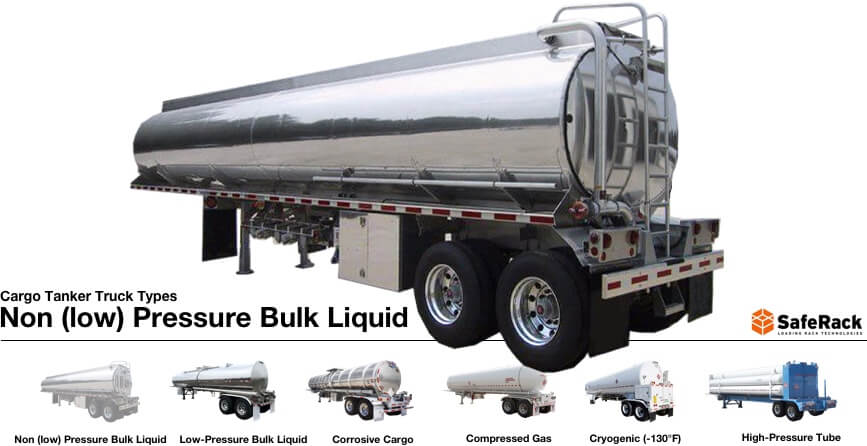
Key Features:
- Oval or elliptical shape for better road stability
- Multi-compartment design for transporting different fuels
- Lightweight aluminum construction
- Designed for atmospheric pressure liquids
Technical Details:
- MAWP: 2.65–4 psig
- Capacity: Up to ~9,000 gallons
- Vacuum loading: Not permitted
Common Cargo:
- Gasoline
- Diesel
- Jet fuel
These tankers are widely used in fuel stations supported by loading arms and couplings for safe transfer.
2. Low-Pressure Chemical Tanker (MC-307 / DOT-407)
Designed for versatile chemical transport.
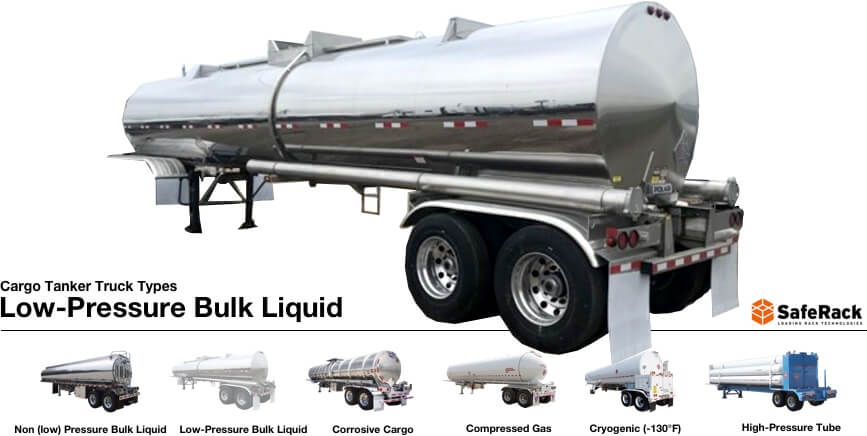
Key Features:
- Circular inner tank design
- Optional insulation or outer jacket
- Suitable for liquid chemicals and food-grade products
Technical Details:
- MAWP: ≥25 psig (can exceed 35 psig)
- Capacity: ~6,000 gallons
Common Cargo:
- Solvents
- Lubricants
- Mild corrosives
- Food-grade liquids
These systems often operate in facilities using railcar loading systems for bulk transfer.
3. Corrosive Material Tank (MC-312 / DOT-412)
Built for aggressive and hazardous chemicals.
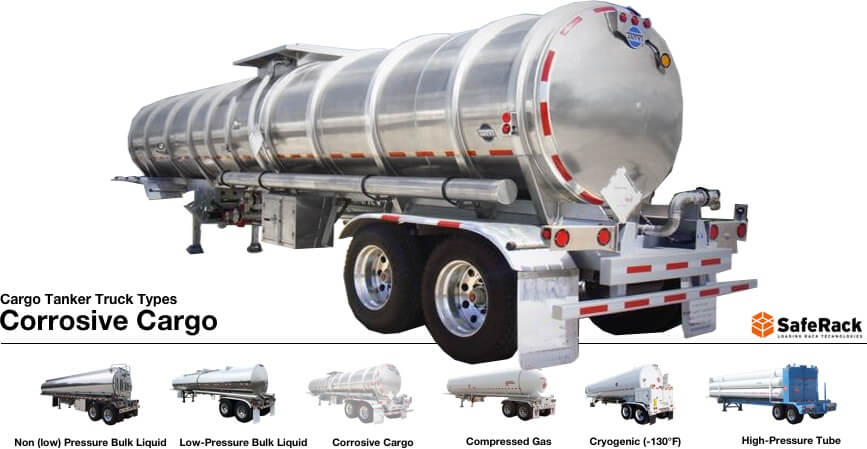
Key Features:
- Reinforced steel construction
- Internal chemical-resistant lining
- Cylindrical “cigar-shaped” design
Technical Details:
- Pressure: ~35–50 psig
- Specialized corrosion protection
Common Cargo:
- Sulfuric acid
- Nitric acid
- Sodium hydroxide
Such environments require strong safety infrastructure like spill containment systems to manage accidental leaks.
4. Compressed Gas Tank (MC-331)
Used for high-pressure gas transport.
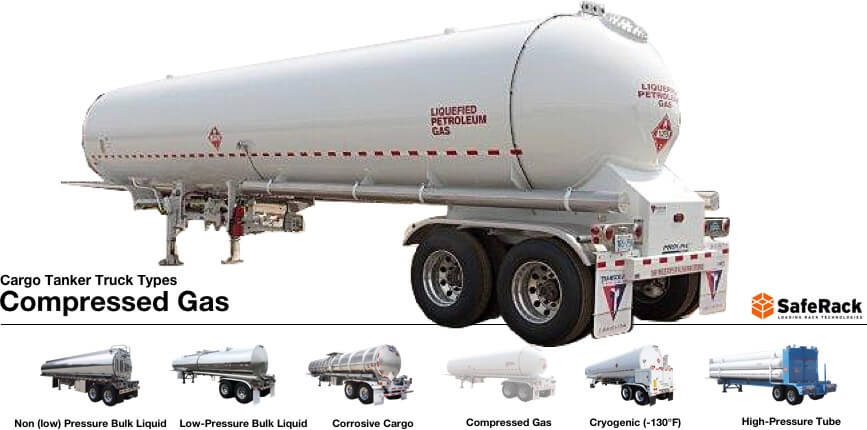
Key Features:
- Thick carbon steel construction
- Rounded ends for pressure resistance
- Designed for liquefied gases
Technical Details:
- Pressure range: ~100–500 psig
- Capacity: 3,500–11,500 gallons
Common Cargo:
- Propane (LPG)
- Butane
- Ammonia
5. Cryogenic Liquid Tank (MC-338)
Designed for extremely low-temperature liquids.
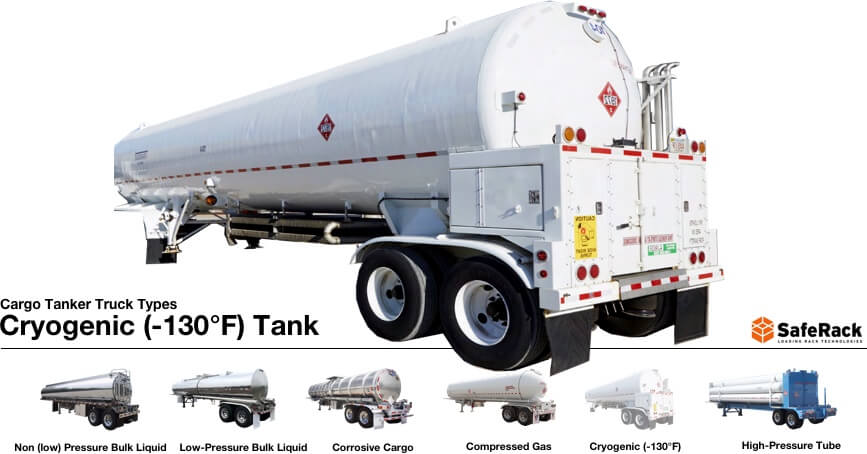
Key Features:
- Double-wall vacuum-insulated structure
- Minimizes heat transfer
- Specialized pressure control systems
Technical Details:
- Temperature: ≤ −130°F
- Pressure: ~23.5–500 psig
Common Cargo:
- Liquid oxygen
- Nitrogen
- Argon
- CO₂
6. High-Pressure Tube Trailer (MEGC)
Used when gases cannot be liquefied.
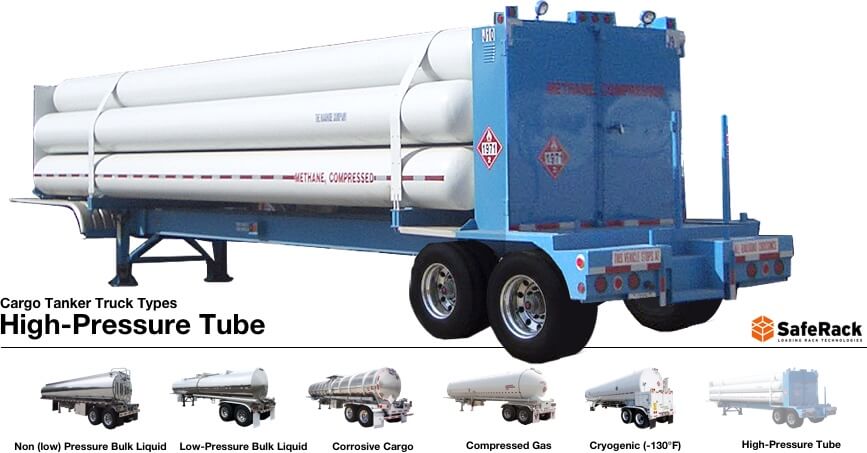
Key Features:
- Multiple cylinders bundled together
- High-pressure storage
- Rear manifold control system
Technical Details:
- Pressure: ~4,000–6,000 psig
Common Cargo:
- Industrial gases
- High-purity gases
7. Dry Bulk / Pneumatic Hopper Trailer
Used for dry materials and powders.
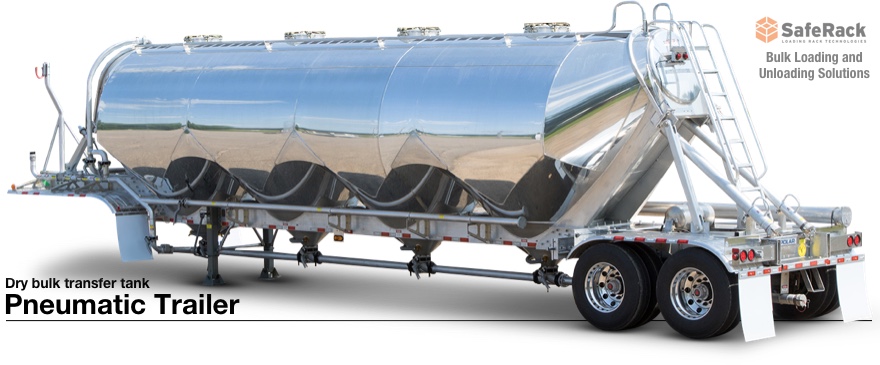
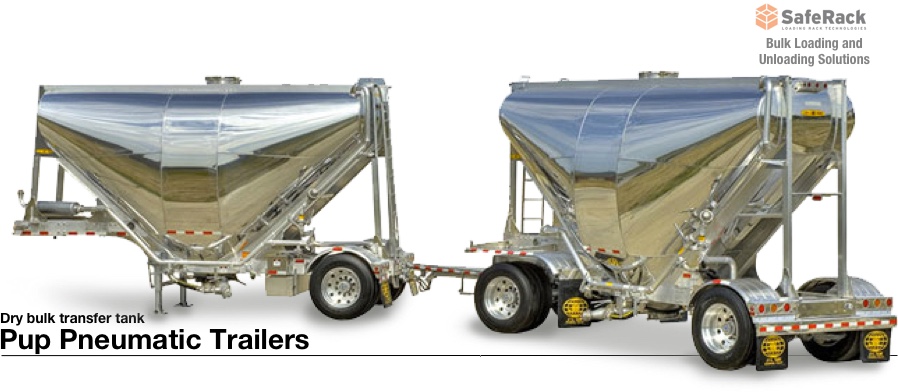
Key Features:
- Hopper-bottom design
- Pneumatic unloading using air pressure
- Multiple compartments with valves
Technical Details:
- Operating pressure: ~15–22 psig
Common Cargo:
- Cement
- Sand
- Plastic pellets
- Flour and sugar

Tanker Truck Safety Features
View full article on Road Tanker Safety
Modern tanker operations rely on advanced safety systems to reduce risks during loading, unloading, and transportation. These features protect workers, equipment, and the environment while ensuring compliance with safety regulations.
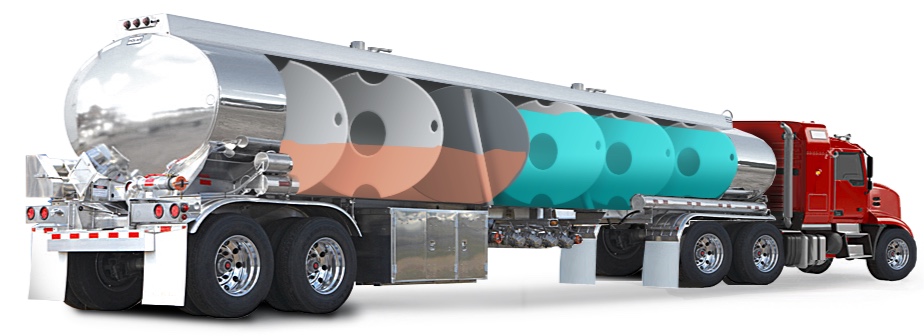
Baffles
- Installed inside tanker compartments to control liquid movement
- Reduce forward and backward surge during braking
- Improve vehicle stability and reduce rollover risk
Baffles work by using internal plates or barriers to slow down the movement of liquid cargo, especially when transporting high-viscosity materials.
Tank Liners
- Protect internal tank surfaces from corrosion
- Extend the operational life of tanker trailers
- Essential for transporting aggressive chemicals
Tank liners are commonly used in tankers carrying solvents or acids, ensuring that materials do not damage the tank structure over time.
Vapor Recovery Systems
- Capture vapors during loading and unloading
- Prevent harmful emissions into the atmosphere
- Reduce product loss and improve efficiency
These systems are commonly used with loading platforms to safely manage vapor release during transfer operations.
Overfill Protection
- Uses sensors to detect high liquid levels
- Automatically stops loading when limits are reached
- Prevents spills, fire hazards, and product loss
Overfill protection systems are often integrated with loading arms and couplings to ensure safe and controlled product transfer.
Pumps & Metering Systems
- Control product flow during bulk loading and transloading
- Ensure accurate measurement for billing and inventory
- Improve operational efficiency and process control
These systems are essential in facilities handling large-scale transfer operations such as truck loading and terminal distribution.
Grounding Systems
- Prevent static electricity buildup during transfer
- Reduce the risk of sparks and explosions
- Ensure safe handling of flammable materials
Grounding systems work by creating a secure electrical bond between the tanker and the loading rack. Advanced grounding and monitoring systems continuously verify this connection and can shut down operations if a fault is detected.
Integrated Safety Systems
- Combine grounding and overfill protection
- Provide real-time monitoring and alerts
- Include visual indicators and event logging
These integrated solutions improve safety by ensuring that all critical systems are functioning correctly before and during loading.
They are specialized tanker designs used to transport liquids, gases, and bulk materials safely.
Different materials require specific pressure ratings, designs, and safety features.
The MC-306 (DOT-406) is widely used for fuel transport like gasoline and diesel.
They include baffles, grounding, vapor recovery, and overfill protection systems.