


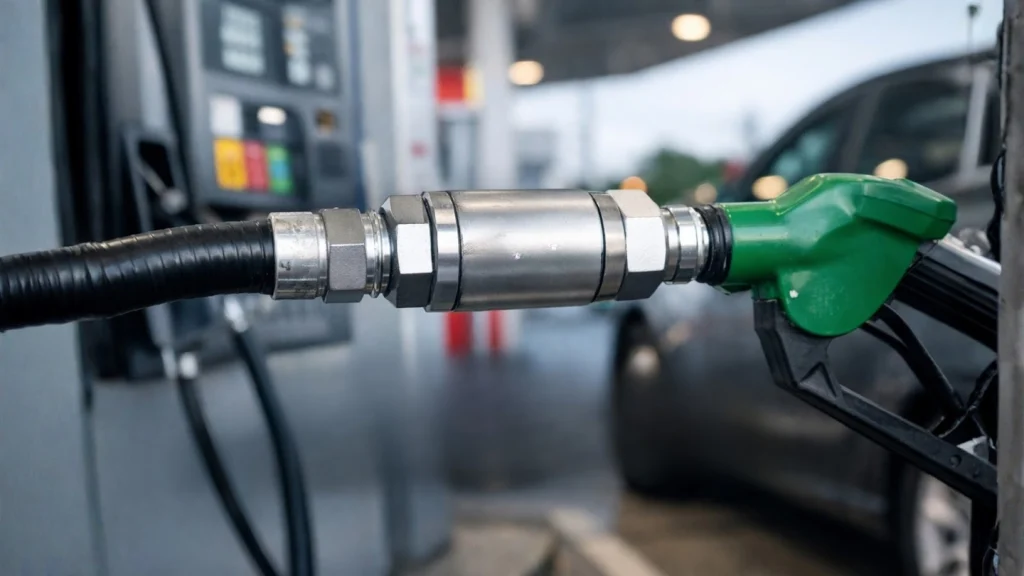
A Breakaway Connector is a safety device installed between the fuel pump nozzle and the dispenser hose at gas stations. It is designed to automatically disconnect if a vehicle drives away while the nozzle is still in the fuel tank. This controlled separation helps prevent damage to fueling equipment and reduces the risk of fuel spills.
Breakaway connectors are an essential component in modern fueling systems, ensuring both operational safety and cost protection.
How Breakaway Connector Works
A breakaway connector functions by responding to sudden tension on the fuel hose. When a vehicle moves away with the nozzle still inserted, the connector separates at a predetermined force.
Key features include:
- Automatic Disconnection: Separates when excessive force is applied.
- Flow Shutoff: Stops fuel flow immediately after separation.
- Quick Reconnection: Can be reattached or replaced easily after activation.
- Damage Prevention: Protects hoses, pumps, and dispensers from severe impact.
According to Business Insider, the cost to replace a gas nozzle is $200.00 to $400.00.
Applications
This devices are commonly used in:
- Gas Stations: Installed in fuel dispensers to preveynt damage from drive-offs.
- Fueling Systems: Used in commercial and industrial fuel transfer setups.
- Vehicle Service Areas: Ensuring safe operation during fueling processes.
- Fleet Operations: Protecting fueling equipment in high-traffic environments.
Benefits
- Prevents Equipment Damage: Reduces costly repairs to hoses and dispensers.
- Enhances Safety: Minimizes risk of fuel spills and related hazards.
- Cost Savings: Avoids frequent replacement of fuel nozzles and components.
- Reliable Operation: Maintains system integrity during unexpected incidents.
By incorporating fueling systems remain safer, more efficient, and better protected against accidental damage.
A breakaway connector is a safety device that disconnects the fuel hose if a vehicle drives away during fueling.
It separates automatically when excessive force is applied and immediately stops fuel flow.
It prevents equipment damage, reduces repair costs, and improves overall safety.