


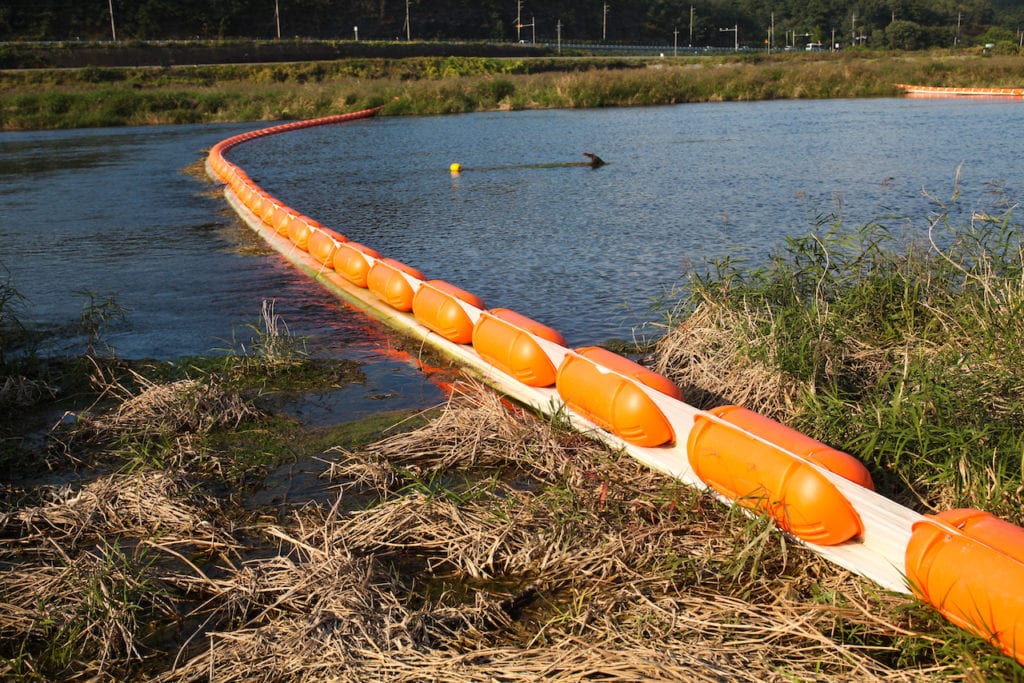
An oil boom is a floating barrier used in the petroleum industry to contain oil spills on water. These barriers are placed around leaked fuel to limit its spread across the surface and keep it within a controlled area for cleanup.
By restricting the movement of spilled oil, response teams can reduce environmental damage and protect sensitive locations such as shorelines, marine habitats, and coastal ecosystems.
Boom in Fuel Transfer Systems
In fuel handling and terminal operations, the term can also refer to a structural component used in loading equipment. In this context, it describes a section of piping that extends the reach of a fuel discharge loading arm, allowing operators to safely transfer fuel between storage systems and transport vehicles.
This extended piping improves flexibility and efficiency during loading and unloading operations.
How Oil Spill Containment Barriers Work
Floating spill barriers operate by staying on the water surface while extending downward beneath it. This creates a physical boundary that slows the spread of oil and keeps it within a designated containment area.
Response teams deploy these barriers using anchors, mooring systems, or landlines to hold them in position around the affected area. Once the spill is contained, cleanup crews can remove or treat the oil using specialized recovery methods.
Types of Oil Spill Containment Barriers
There are several designs used depending on the spill conditions and cleanup strategy.
Hard Containment Barriers
These floating systems are typically made of durable plastic or metal. A cylindrical float keeps the barrier on the surface while a weighted skirt hangs below the waterline, helping redirect oil away from sensitive areas such as wetlands or shellfish beds.
Absorbent Barriers
These look similar to long tubes and are made from materials that absorb oil. Instead of just containing the spill, they soak up the fuel. Because they become saturated, they must be replaced and disposed of properly after use.
Fire Containment Barriers
These specialized systems are constructed from metal components. Once the oil is contained within the barrier, the collected fuel may be ignited and burned in a controlled operation to remove it from the water.
Importance in Oil Spill Response
Floating containment barriers are a critical part of spill response operations. Their main function is to control the movement of leaked oil so that recovery techniques such as skimming, absorption, or controlled burning can be carried out more efficiently.
Rapid deployment helps reduce environmental damage and prevents contamination from spreading to nearby ecosystems.
Its purpose is to contain oil spills on water and limit the spread of contamination.
Most systems only contain the spill. Absorbent versions can remove oil by soaking it up but require disposal afterward.
They are usually anchored or connected to mooring systems to keep them positioned around the spill area.
They are used in oceans, rivers, harbors, and other waterways during oil spill response operations.