


A body harness or body belt (also referred to as a full-body harness) is a critical component of a personal fall arrest system (PFAS). It consists of straps secured around the thighs, pelvis, waist, chest, and shoulders, designed to distribute fall forces safely across the body.
Unlike older body belts, modern safety standards prioritize full-body harnesses because they significantly reduce the risk of serious injury during a fall.
Key Components of a Body Harness
- Straps: Secure the body and distribute impact forces
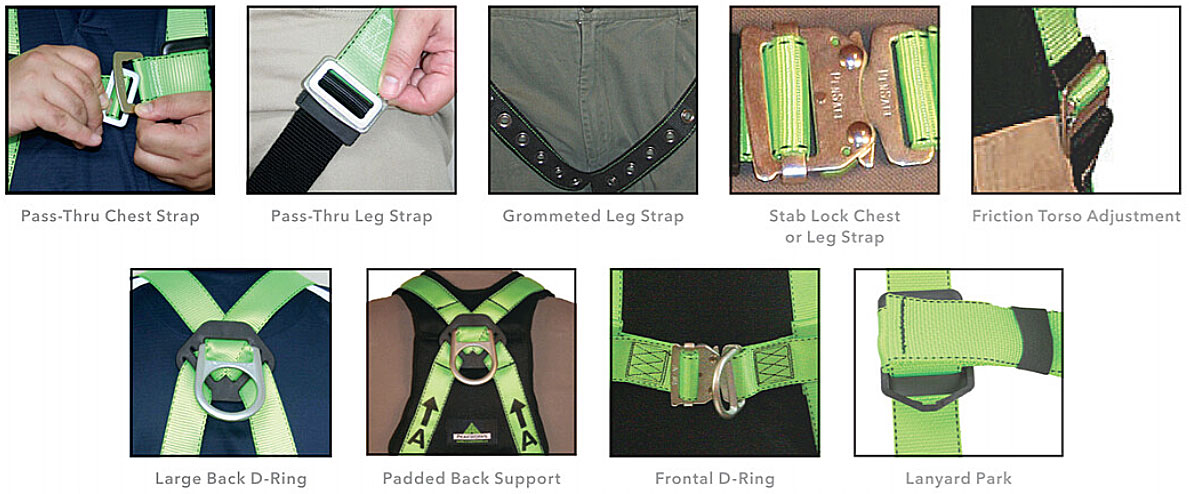
- D-Rings (Attachment Points): Connect to lanyards, lifelines, or anchorage systems
- Buckles & Adjusters: Ensure proper fit and safety
- Padding (Optional): Improves comfort for extended use

Body Harness Classes (D-Ring Positions)
Full-body harnesses are categorized based on D-ring placement, which determines their function and application:
| Class | D-Ring Location | Purpose |
|---|---|---|
| Class A | Back (between shoulder blades) | Fall arrest (standard for all harnesses) |
| Class D | Front (chest area) | Ladder climbing & positioning |
| Class E | Shoulder level | Confined space entry & rescue |
| Class L | Waist/hips | Ladder climbing systems |
| Class P | Hip level (sides) | Work positioning |
Important: Most harnesses include Class A D-ring as a standard. Some jobs require multiple classes (e.g., AE or AP) for proper safety and positioning.
Applications
Body harnesses are widely use in:
- Construction sites (working at height)
- Oil & gas platforms
- Industrial maintenance
- Warehouse and loading operations
- Confined space entry and rescue operations
Safety Benefits
- Distributes fall forces evenly, reducing injury risk
- Prevents free fall and sudden impact trauma
- Provides secure attachment points for lifelines
- Enhances worker stability and positioning

Best Practices for Use
- Replace harness if damaged or after a fall event
- Always inspect harness before each use
- Ensure proper fit (snug but not restrictive)
- Attach to a certified anchor point
- Use correct D-ring for the application
No. A body harness distributes force across the body, while body belts concentrate force on the waist and are no longer recommended for fall arrest.
The Class A D-ring (back) is the primary attachment point for fall arrest systems.
It should be snug but comfortable, allowing movement without looseness that could cause injury during a fall.
Yes, if it includes multiple D-ring classes suited for different applications (e.g., fall arrest + positioning).
Before every use and periodically as part of a formal safety inspection program.