


A Body Belt is a safety strap secured around a worker’s waist and used to connect the worker to safety equipment, such as a lanyard, lifeline, or deceleration device. It was historically used in workplaces where employees performed tasks at heights or in elevated areas. According to OSHA, a body belt includes a fastening system to secure it around the waist and attachment points for connecting to fall protection equipment.
In the past, the belt was commonly used as part of fall protection systems in construction and industrial work. However, safety standards evolved due to concerns about injury risks. Today, it is important to understand both the purpose and the limitations of this equipment in workplace safety.
How Body Belts Are Used
Body belts were designed to help workers remain connected to safety lines or positioning systems during certain tasks. Proper use typically involved the following steps:
- Secure Fit: The belt is fastened firmly around the worker’s waist to ensure stability and support.
- Attachment to Safety Equipment: The belt connects to a lanyard, lifeline. A deceleration device that links the worker to an anchor point.
- Positioning Support: In some tasks, the belt helps maintain a stable working position while performing maintenance or installation work.
- Safety Monitoring: Workers must check connections and equipment regularly to ensure proper function and safety.
Although these systems provided support, changes in safety regulations have limited how body belts can be used today.
Applications
They have been used in several industries and work environments, including:
- Construction Work: Supporting workers performing tasks on elevated structures.
- Utility and Electrical Work: Allowing workers to position themselves while working on poles or equipment.
- Industrial Maintenance: Helping workers maintain balance when performing repairs or inspections at height.
- Positioning Systems: In certain cases, the belt may still be used for work positioning rather than fall arrest.
However, modern safety practices now prioritize alternative equipment that provides better protection.
Benefits
- Helps maintain a stable position while working at height.
- Provides a connection point for safety lines and equipment.
- Supports controlled positioning during certain maintenance tasks.
- Contributes to workplace safety when used according to guidelines.
Despite these advantages, safety regulations limit the use of the fall arrest systems.
Safety Note
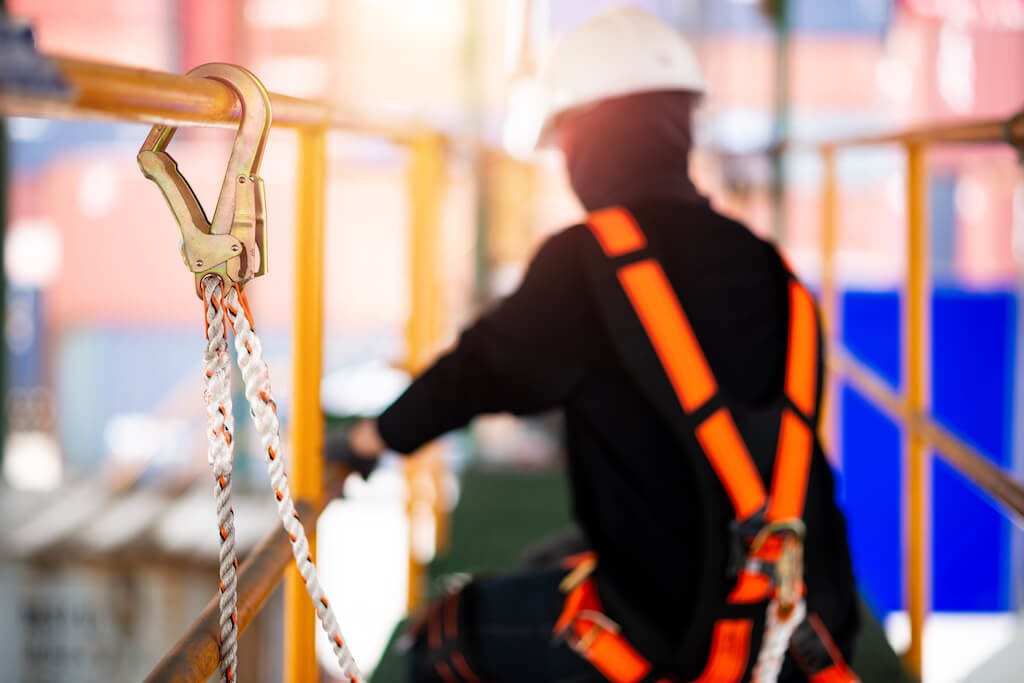
According to OSHA regulations, body belts are not acceptable as part of a personal fall arrest system. Since January 1, 1998, full-body harnesses have replaced them for fall arrest because they distribute fall forces more safely across the body and reduce the risk of serious injury.
A body belt is a waist strap used to connect a worker to safety equipment, such as a lanyard or lifeline, for positioning or restraint during certain tasks.
No. OSHA regulations state that body belts cannot be used as part of a personal fall arrest system.
Full-body harnesses distribute fall forces across the body, reducing the risk of injury compared to waist-only support.
They may still be used in some work positioning or restraint systems, depending on safety guidelines and workplace requirements.