


Biomass refers to organic materials that can be converted into fuel. Common types include algae, corn, switchgrass, soybeans, sunflower, and canola. In simple terms, biomass is a renewable energy source derived from plants or animals.
As governments and private sectors invest in research, biomass energy is emerging as a growing industry with multiple applications.
Uses of Biomass Energy
The U.S. Energy Administration identifies several ways to convert biomass into energy:
- Wood and Wood Waste – Burned to heat buildings, produce industrial process heat, or generate electricity.
- Agricultural Crops and Residues – Burned directly as fuel or processed into liquid biofuels.
- Food, Yard, and Wood Waste – Burned in power plants to produce electricity or converted into biogas in landfills.
- Animal Manure and Human Sewage – Processed into biogas, which can be used as fuel.
Biomass provides a versatile energy solution while helping reduce dependence on fossil fuels.
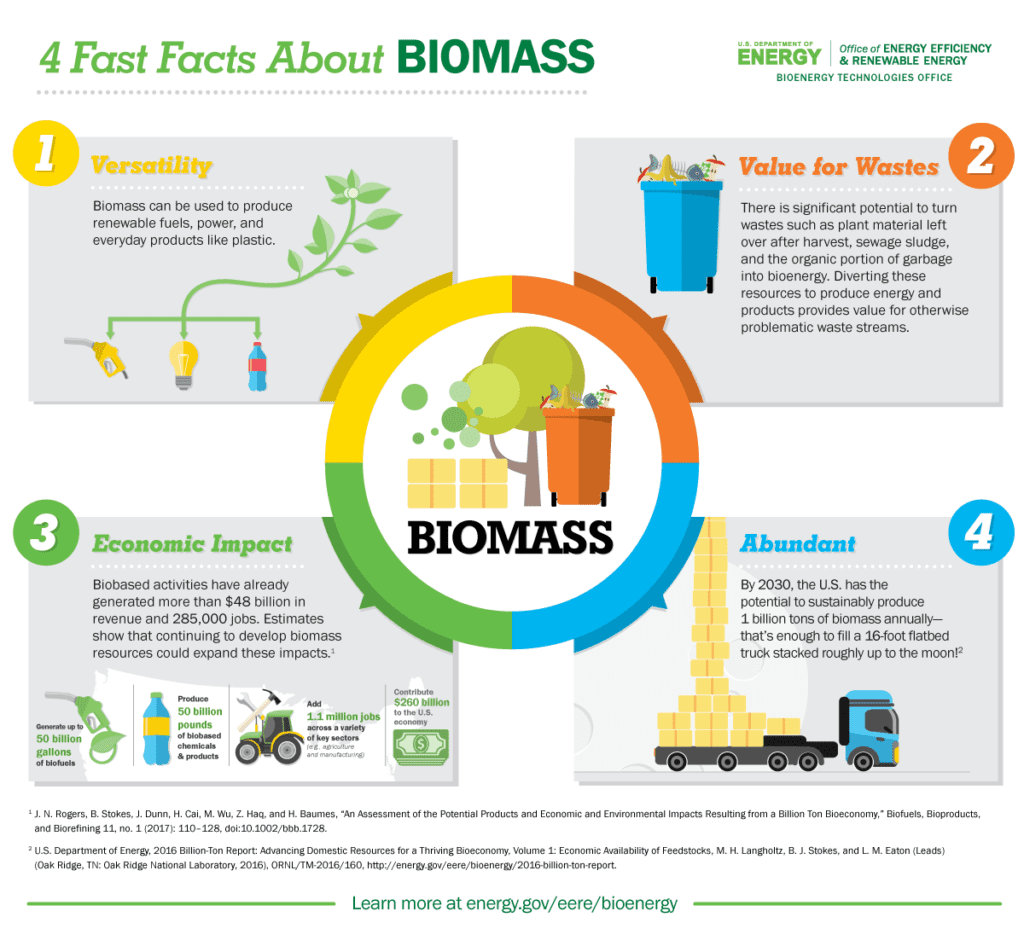
Types of Biomass
Biomass comes from various sources, and new types continue to emerge as the sector grows:
- Energy Crops – Plants specifically grown for fuel production, such as switchgrass or corn.
- Agricultural Residues – Leftover crop materials like stalks, husks, and shells.
- Animal Waste – Manure or other organic byproducts processed into energy.
- Organic Municipal Waste – Food, yard, and wood waste collected from households and industries.
Research and development continue to expand the types of biomass available for energy, making it a promising area for renewable energy growth.
Benefits of Biomass Energy
- Provides a renewable alternative to fuels
- Reduces landfill waste by converting organic material into energy
- Supports rural economies and creates jobs in biomass cultivation and processing
- Can be converted into electricity, heat, or liquid biofuels
- Helps diversify energy portfolios and reduce carbon emissions
As technology advances and investment grows, biomass energy has strong potential for sustainable energy solutions worldwide.
Biomass is any organic material that can be converted into energy, including plants, algae, and animal byproducts.
Biomass can be burned, processed into biofuels, or converted into biogas for electricity, heating, or fuel.
Biomass comes from living or recently living organisms, which can be replanted, regrown, or replenished naturally.
The energy, agricultural, waste management, and chemical industries all utilize biomass for power, fuel, and raw materials.