


A ball valve is a widely used device in piping systems designed to control the flow of liquids or gases. It functions by using a spherical component with a hole through its center, which can align with the pipe for flow or rotate to stop it. They are common in industrial settings, especially in dry disconnect couplings that handle chemicals or fuel, due to their reliability and low risk of spills.
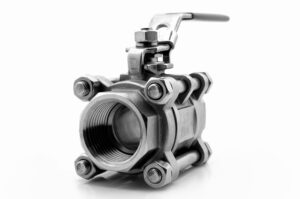
How Ball Valves Work
- Open Position: The hole in the ball aligns with the pipeline, allowing fluid or gas to flow freely.
- Closed Position: Rotating the ball perpendicular to the pipeline stops the flow.
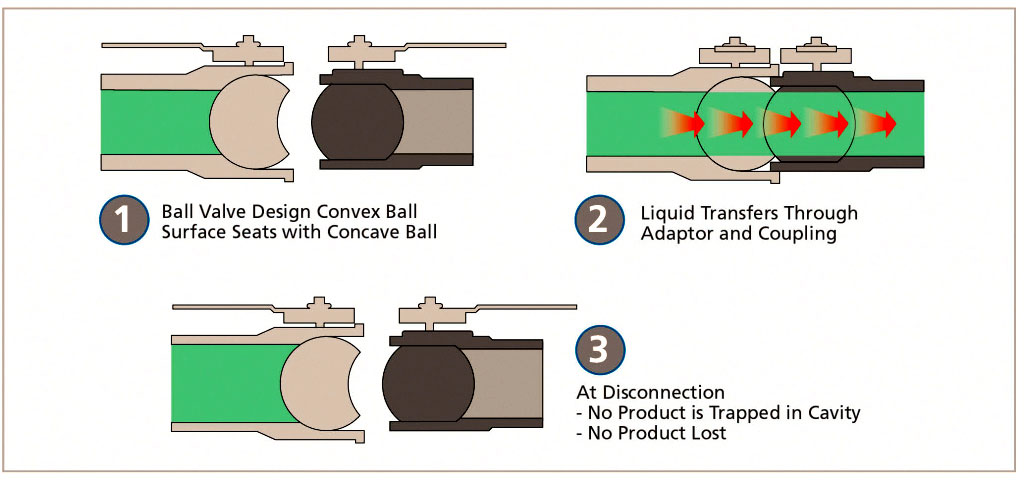
- No-Spill Design: Modern ball valves use multiple mechanical interlocks that ensure liquid cannot accumulate in cavities when disconnected, preventing accidental spills and chemical releases.
The Environmental Protection Agency (EPA) provides guidelines for the use of valves in fuel and chemical industries to ensure compliance and environmental safety. Regular inspection and maintenance are recommended to meet regulatory standards.
Applications
- Handling hazardous chemicals at fuel depots and industrial sites.
- Dry disconnect couplings for transferring liquids without spillage.
- Flow control in pipelines for oil, gas, and chemical industries.
Ball valves are valued for their durability, simple operation, and ability to prevent unintended releases.
A valve that uses a spherical ball with a hole through the center to control flow in a piping system.
Modern valves use multiple interlocks and a cavity-free design that ensures no product can nest in the valve when disconnected.
They are used in industrial piping, fuel transfer stations, chemical plants, and any system requiring safe and controlled liquid or gas flow.
Rotate the handle or actuator: one position allows flow (open), the other stops flow (closed).
Yes, regular inspections are recommended to ensure compliance with EPA guidelines and to prevent leaks or mechanical failure.