

An air stripper is a treatment system used to clean contaminated water, most commonly water collected in deck sumps or industrial drainage areas. It works by separating harmful chemicals from water before the water is safely discharged or reused.
This process is widely used in industrial and environmental cleanup operations where groundwater or surface water has been exposed to fuel or chemical contamination.
How an Air Stripper Works
The system moves air through contaminated water in an above-ground treatment unit. As air passes through the water, certain chemicals transfer from the liquid into vapor form.
These vapors are then captured and filtered. After treatment, the remaining water is significantly cleaner and safer to handle. In many facilities, additional equipment such as top loading arms is used during the final handling stages.
What Contaminants Are Removed
This treatment method is designed to remove chemicals known as volatile organic compounds (VOCs). These compounds easily evaporate into the air and are commonly found in fuel-related contamination.
VOCs are a major concern because they can harm both human health and the environment if left untreated.
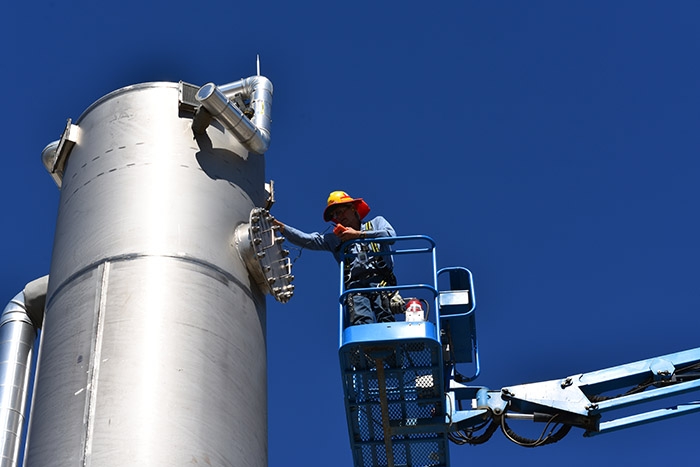
Where Air Stripping Is Used
Air stripping systems are commonly found in:
- Fuel handling facilities
- Industrial plants
- Environmental remediation sites
- Areas with contaminated groundwater or runoff
They are especially useful where fuel, solvents, or petroleum products are present.
Why This Process Is Important
Using proper water treatment systems helps facilities:
- Reduce environmental contamination
- Meet regulatory and compliance requirements
- Improve workplace and site safety
- Protect nearby soil and water sources
Treating contaminated water before release is a critical step in responsible industrial operations.
It removes harmful chemicals from contaminated water before disposal or reuse.
The system targets volatile organic compounds commonly found in fuel and industrial runoff.
Yes, it is typically performed using above-ground treatment equipment.
It is often captured in deck sumps or drainage systems at industrial sites.