


Air scrubbers are devices design to remove contaminants from the air. They are widely use in industrial, commercial, and residential settings to improve indoor air quality and reduce exposure to harmful particles and gases.
Air scrubbers work by drawing air through a series of filters, which capture pollutants, odors, and airborne particles. Depending on the application, scrubbers can be tailor for odor control, particle removal, or industrial gas treatment.
Types of Air Scrubbers
1. Odor-Control Air Scrubbers
- Use activated carbon filters to absorb odors and volatile organic compounds (VOCs)
- Commonly used in commercial kitchens, smoking areas, and waste management facilities
- Effective at controlling strong or persistent odors
2. Particle-Removal Air Scrubbers
- Use HEPA (High-Efficiency Particulate Air) filters to capture dust, pollen, pet dander, mold spores, and other airborne particles
- Ideal for homes with allergies or asthma and cleanroom environments
- Maintain cleaner, healthier air indoors
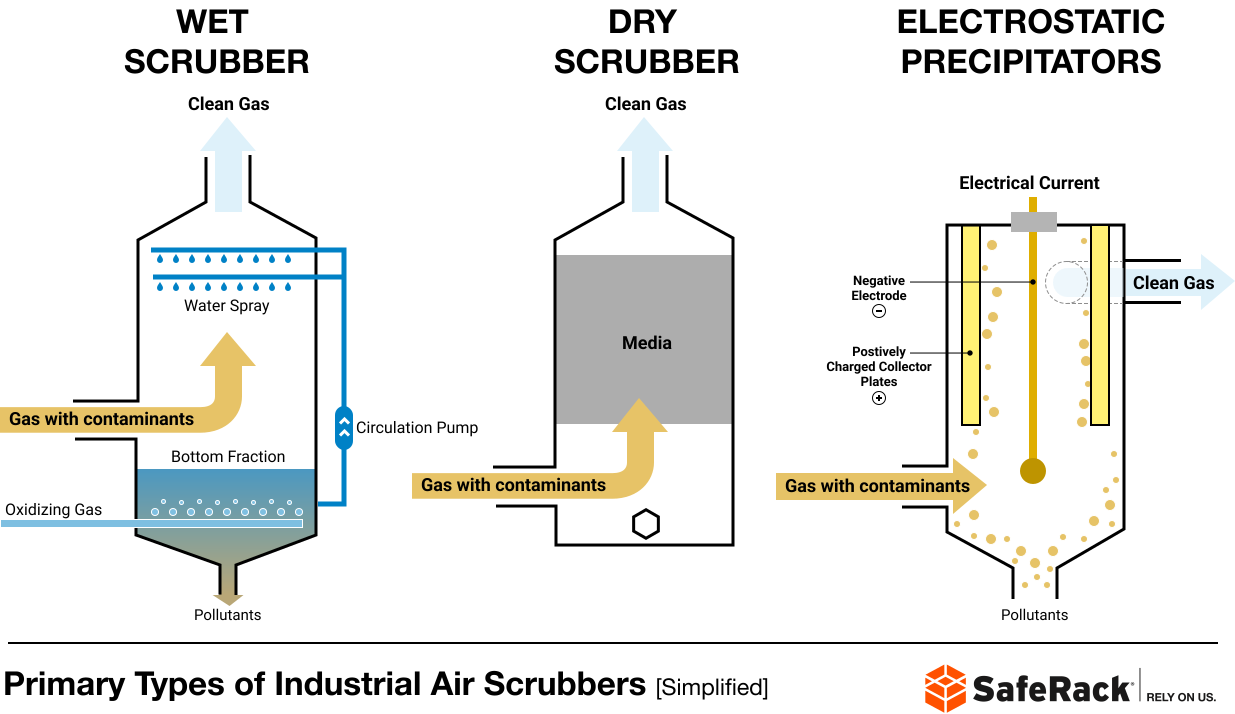
Industrial Air Scrubber Types
A. Wet Scrubber
- Remove contaminants from gas streams using water or liquid absorbents
- Contaminated gas passes through the liquid, which absorbs pollutants
- Can be packed with liquids designed to bind specific pollutants
- Effective for industrial gas treatment, chemical processing, and particulate control
B. Dry Scrubber
- Use a dry sorbent (powder) to remove pollutants from exhaust gases
- Polluted gas passes through a chamber where the sorbent binds with contaminants
- Advantages:
- Can handle various gases
- Not affected by humidity
- Simple to operate and maintain
- Commonly removes sulfur dioxide (SO2), hydrogen sulfide (H2S), and fly ash
C. Electrostatic Precipitators
- Use electrostatic forces to remove particulate matter from gas streams
- Components: discharge wires and oppositely charged collector plates
- Particles are charged and attracted to the plates for collection
- Used in power generation, cement production, steelmaking, hospitals, and commercial buildings
- Highly efficient for fine dust and smoke removal
Applications of Air Scrubber
- Industrial facilities: Control particulate emissions and chemical gases
- Commercial kitchens & food processing: Eliminate strong odors and grease particles
- Hospitals & laboratories: Maintain sterile and safe air conditions
- Residential use: Reduce allergens, mold spores, and airborne dust
Air scrubbers remove airborne contaminants like dust, odors, VOCs, and harmful gases to improve air quality.
Wet scrubbers use liquids to absorb pollutants, while dry scrubbers use a dry sorbent to bind contaminants.
They charge particles in the gas stream, which are then collect on plates. They are widely use in power plants, cement factories, steel plants, and hospitals.
Yes, HEPA-filter air scrubbers capture pollen, dust, and pet dander, making them ideal for allergy-prone environments.
No, they are use in residential, commercial, and industrial settings, depending on the filter type and pollutant type.