





A Baton Rouge marine terminal recently completed a major infrastructure upgrade, replacing 40-year-old marine loading arms with SafeRack’s DockReel system—a modern alternative that cuts operational costs, boosts safety, and streamlines vessel loading operations.
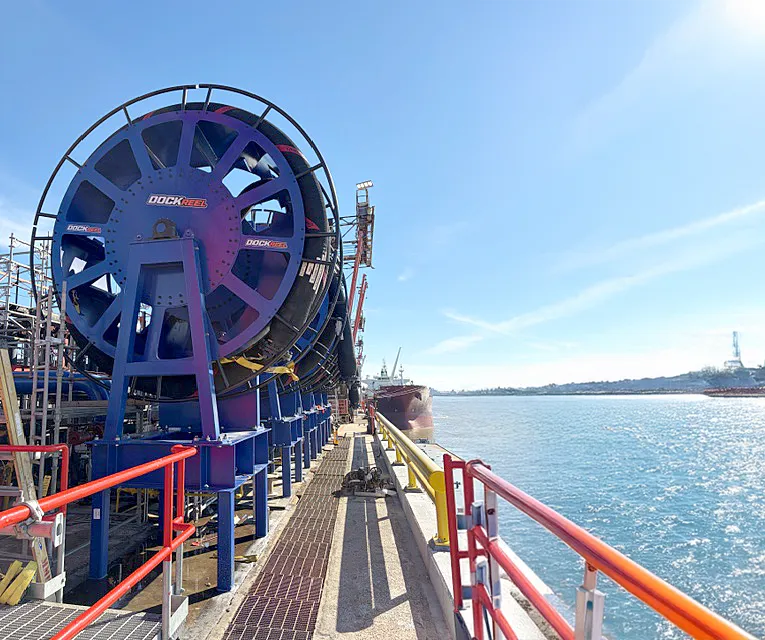
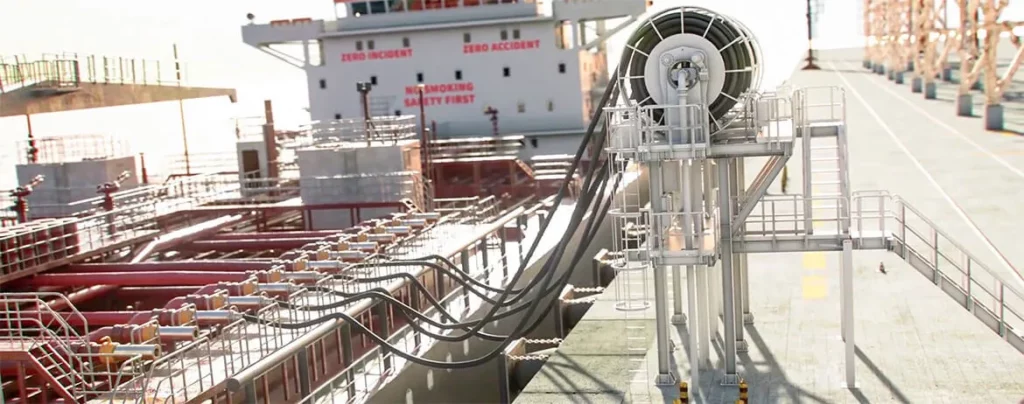

DockReel, The Marine Loading Arm Alternative
SafeRack delivers decades of expertise in designing marine solutions, but also marine gangways and fluid transfer systems for bulk products. Our engineering team specializes in mechanical, electrical, and hydraulic solutions tailored for marine operations.
The Installation
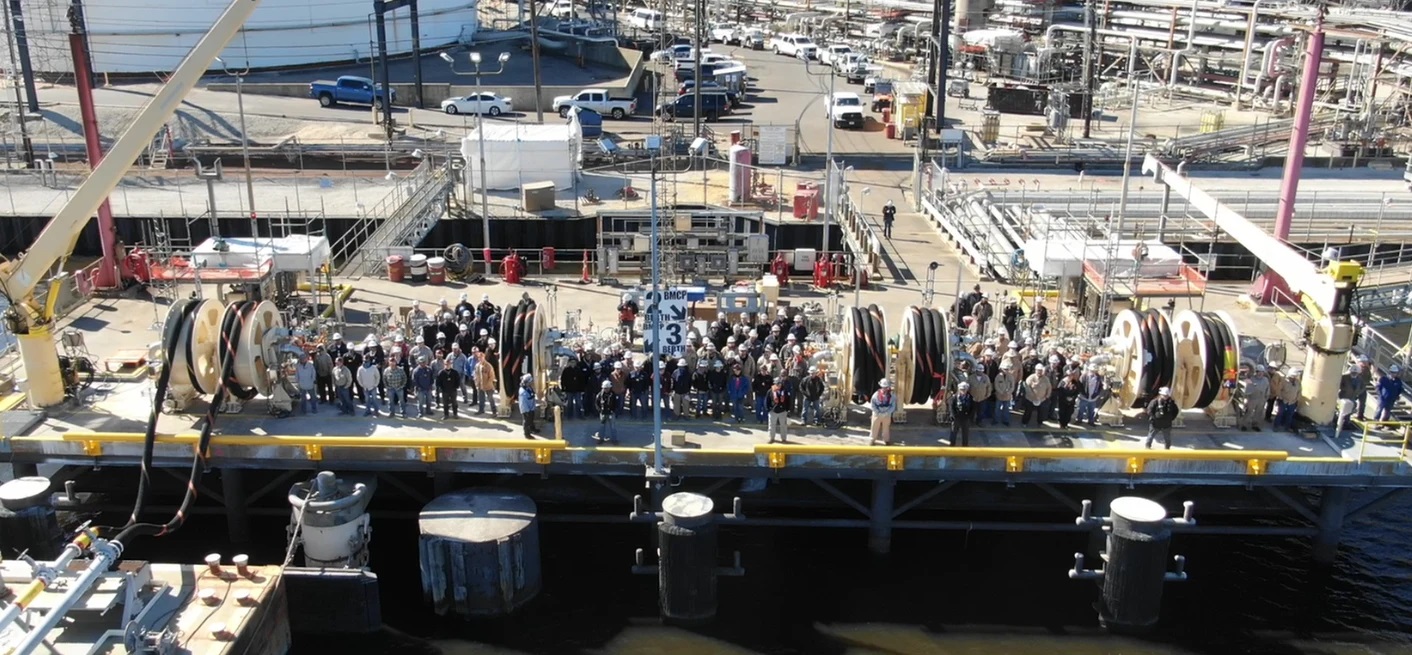
SafeRack installed multiple DockReels equipped with 75-foot 10-inch hoses, along with a 75-foot telescoping crane to support loading operations. The project involved removing legacy marine arms that had served the terminal for four decades and installing raised platforms to accommodate the new reel-based system.
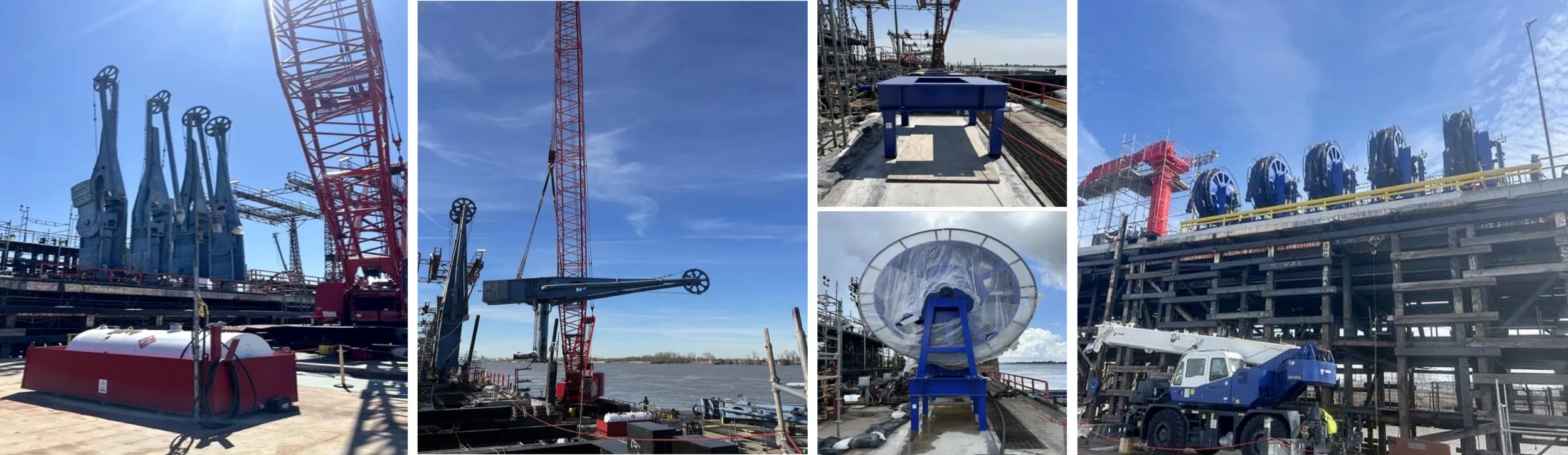
The DockReels were shipped on flat racks and in open-top containers, then installed on custom-designed elevated platforms. After hose testing and connection, the system was commissioned and ready for barge and ship loading on the Mississippi River.
Installation – Left to Right
- 40+ year old loading arms are being replaced.
- Removing old loading arms
- DockReel platform
- DockReel installed.
- Completed installation as viewed from the barge deck.
Why Facilities Are Moving from Loading Arms to DockReel
Traditional marine loading arms have been the industry standard for decades, but they come with significant drawbacks that impact both safety and the bottom line. DockReel offers a proven alternative that addresses these challenges head-on.
Weight and Footprint Reduction
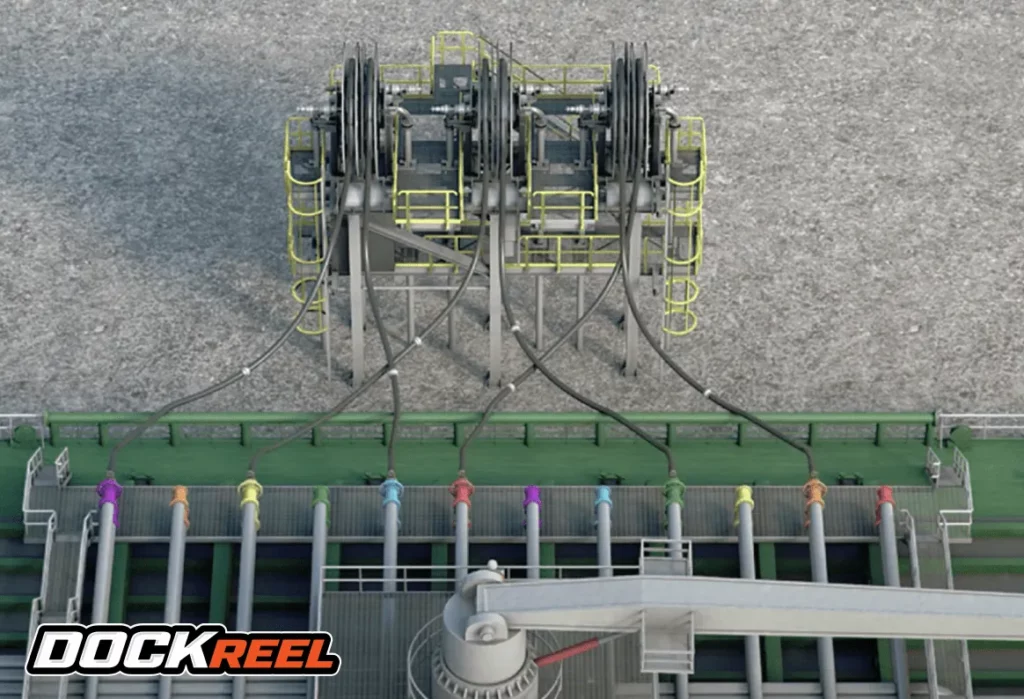
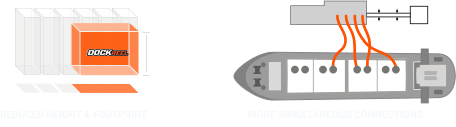
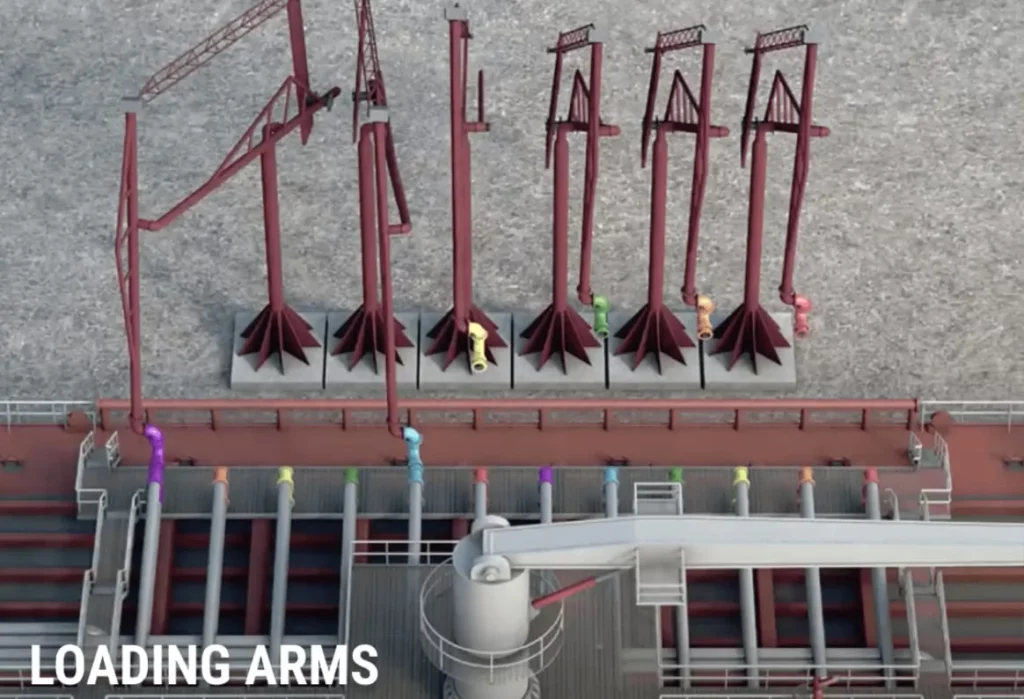
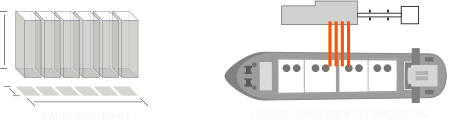
Conventional loading arms are heavy, rigid structures that require substantial support infrastructure. DockReel systems are 60-70% lighter than traditional marine loading arms, dramatically reducing structural requirements and installation complexity.
The reduced weight translates to:
- Lower structural support costs
- Easier installation and commissioning
- Simplified future modifications or expansions
- Reduced dock space requirements
This lighter footprint is particularly valuable for facilities with space constraints or aging dock infrastructure that can’t support heavy equipment loads.
Cost Savings That Add Up
The financial case for DockReel is compelling. Facilities can expect:
- 25% savings in upfront costs compared to traditional loading arms
- 75% savings in operational costs over the equipment lifecycle
These operational savings come from multiple sources. Traditional loading arms require regular maintenance of swivel joints, seals, and mechanical components. A single swivel joint seal replacement can cost $65,000, and facilities with multiple loading arms face preventive maintenance bills exceeding $260,000 every 18 months.
DockReel systems eliminate most of these maintenance headaches. Without complex swivel joints and heavy mechanical linkages, there are fewer components to maintain, inspect, and replace.
Reduced Loading Times and Demurrage
Every hour a vessel sits at dock waiting to load or unload costs money. DockReel’s flexible hose system and wireless controls enable:
- Faster vessel hookup and disconnect
- Reduced transfer times
- Lower demurrage charges
- Better throughput during peak shipping periods
The hose auto-unwind feature can deploy up to 1,500 feet of hose automatically if a vessel moves unexpectedly, maintaining connection and preventing costly interruptions.
Advanced Safety Features
Safety is paramount in marine loading operations. DockReel integrates several features that traditional loading arms lack:
Marine Emergency Breakaway Couplings: Weak-link dry-break couplings installed between hose sections and at manifold connections automatically disconnect if tension exceeds safe limits—preventing spills and equipment damage when vessels drift or depart unexpectedly.
Wireless Control Units: Remote operation improves operator visibility and keeps personnel at a safe distance during connections and transfers. Operators can monitor and control operations without being exposed to pinch points or moving mechanical components.
Hose Auto-Unwind: If a vessel begins moving away from dock, the system automatically deploys additional hose (up to 1,500 feet) to maintain connection and prevent sudden disconnections that could cause spills.
Traditional loading arms present pinch point hazards from rotating and moving components that can cause serious injuries. Their rigid structure also makes them less forgiving when vessels shift position due to tides, currents, or wind.
DockReel’s advantages over marine loading arms

Operational Flexibility
DockReel systems accommodate a wider range of operational scenarios than rigid loading arms:
- Variable hose lengths from 50 to 500+ feet depending on application
- Multiple reel configurations for simultaneous product loading
- Custom designs for small-footprint riverside terminals or multi-purpose cargo docksides
- Accommodates vessel movement caused by tides and currents without disconnecting
This flexibility is particularly valuable for facilities that handle different vessel types or face challenging environmental conditions like tidal variations or ice.
Lower Environmental Impact
DockReel contributes to sustainability goals through:
- Reduced CO₂ emissions from faster loading cycles
- Lower spill risk due to breakaway couplings
- Minimal maintenance waste compared to loading arm seal and component replacements
The Bottom Line
The Baton Rouge terminal’s decision to replace 40-year-old loading arms with DockReel reflects a broader industry shift. Facilities managing aging infrastructure face a choice: invest in expensive loading arm refurbishment and continue high maintenance costs, or upgrade to a system designed for lower total cost of ownership.
SafeRack’s engineering team provides on-site assessments, custom design support, and compliance guidance to ensure DockReel installations meet OSHA, SPCC, and industry safety standards while optimizing operational efficiency.
For terminals looking to cut loading times, reduce maintenance expenses, and improve safety—while preparing for future volume growth—DockReel offers a proven alternative to traditional marine loading arms.