





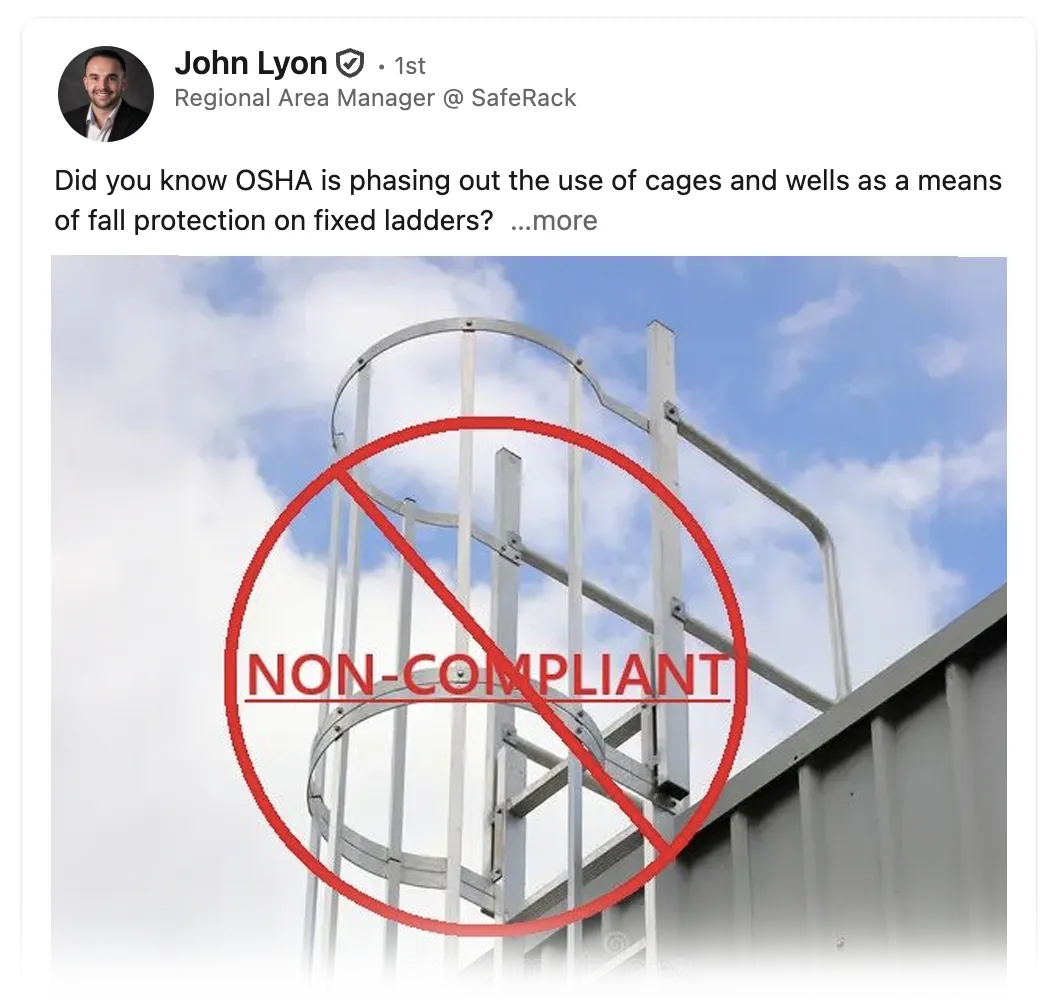
OSHA’s Walking-Working Surfaces rule has fundamentally changed how we manage fixed ladders. While ladder cages have been the industry standard for decades, they are being phased out in favor of Ladder Safety Systems (LSS) or Personal Fall Arrest Systems (PFAS). This shift is designed to replace passive protection with active systems that actually stop a fall in progress.
Key Compliance Deadlines
The requirement for modern fall protection depends on when your ladder was installed and its height.
- New Installations: Any ladder installed after November 19, 2018, that exceeds 24 feet must have an LSS or PFAS.
- Existing Cages: Ladders installed before 2018 may keep their existing cages until the system is replaced or until the final deadline.
- The Retrofit Deadline: By November 18, 2036, all fixed ladders over 24 feet must be retrofitted with modern fall protection.
Industry Feedback: Concerns vs. Reality
Dialogue from safety professionals indicates that transitioning away from cages presents unique operational challenges.
| Common Concern | Regulatory & Safety Reality |
|---|---|
| “All caged ladders are now non-compliant?” | Cages are still legal on older ladders until 2036 or until a major repair is needed. |
| “Cable systems make it hard to exit at the top.” | Proper system design includes a “walk-through” extension to allow for a safe transition. |
| “Ladders are a high-risk access point.” | Many facilities are replacing ladders with stairs to eliminate ladder-specific safety risks. |
“Vertical lifeline systems shouldn’t make much difference in a project when compared to adding a cage… [The cost] is far less than the cost of your operators!”
— John Lyon, Regional Area Manager
The Value of an Expert Safety Walk
SafeRack Regional Area Managers (RAMs) serve as expert advisors to help you determine which rules apply to your specific equipment. During a no-cost on-site safety assessment, a RAM can identify compliance gaps and suggest solutions that prioritize both operator safety and facility throughput. Focusing on long-term efficiency ensures that your safety upgrades reduce downtime rather than creating new operational bottlenecks.
Industry Perspectives on the Ladder Cage Phase-Out
Dialogue and technical concerns raised by safety consultants, EHS managers, and veteran operators regarding the shift to Ladder Safety Systems (LSS)
| Dialogue Theme | Operator & Consultant Perspective | Compliance & Safety Reality |
|---|---|---|
| Operational Costs | Beyond the hardware, costs include specialized training and the recurring expense of inspecting personal gear. | While LSS adds inspection requirements, it prevents “pinball” injuries caused by cages during a fall. |
| Transition Risk | Operators report feeling unsafe at the top because they must unhook before fully reaching the platform . | Systems must be designed with “walk-through” extensions so users stay hooked until they are on a safe surface. |
| The “Rest” Factor | Veterans value cages as “rest places” or “back scratchers” to lean against during 100-foot climbs. | Cages provide a psychological “failsafe” but often mangle workers during an actual vertical fall. |
| Training Gaps | If techs aren’t trained or equipped with harnesses, they may bypass the LSS entirely to “get the job done”. | Installing an LSS without a rigorous training program can inadvertently create a less safe work environment. |
| Short Ladders | Some EHS experts argue the burden of LSS doesn’t outweigh the benefits on shorter, low-risk ladders. | OSHA’s 24-foot threshold is the current standard, though any climb over 4 feet carries risk. |
Assessing the 2026 Regulatory Landscape
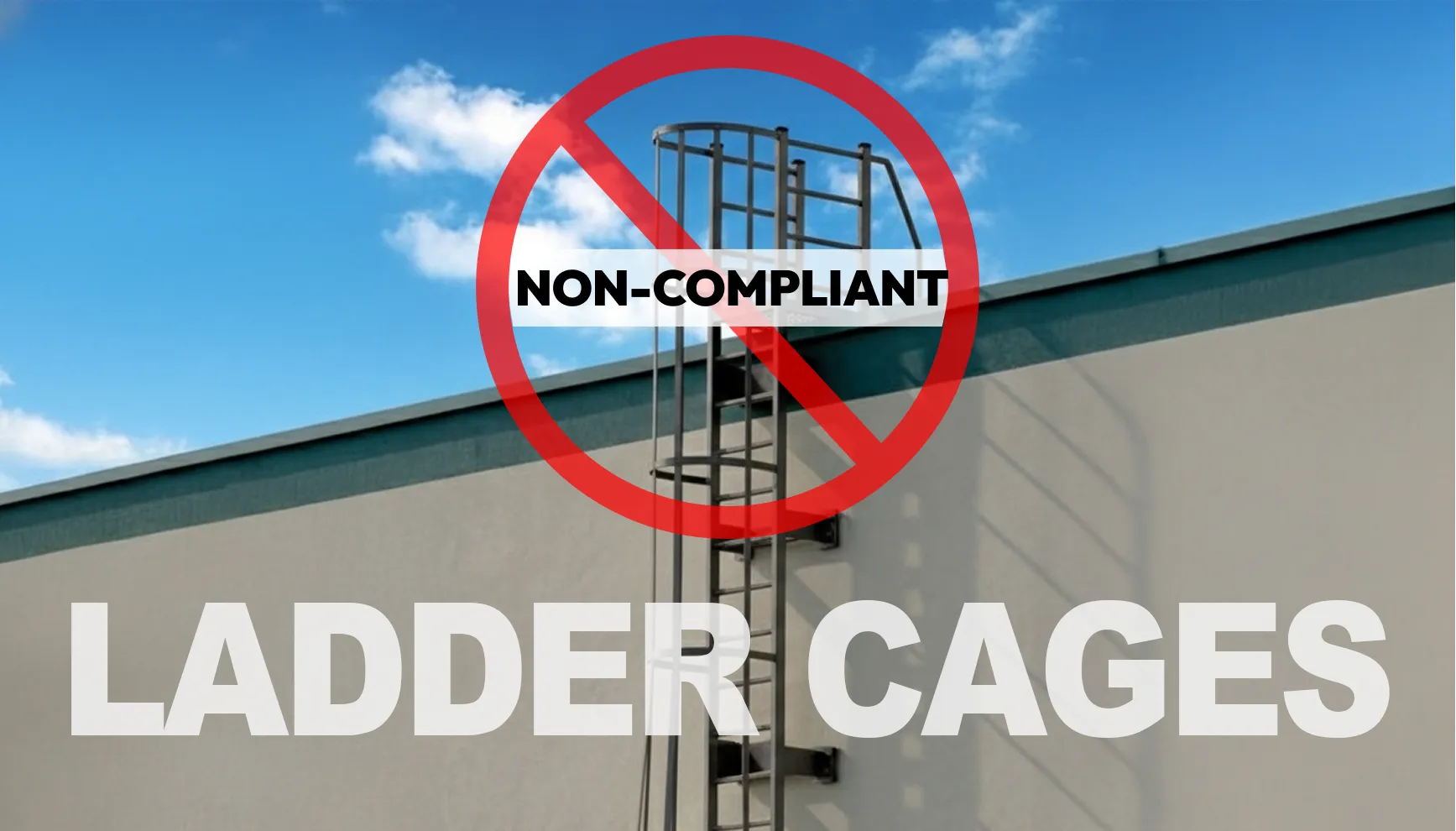
As of January 2026, the industry is closely watching a proposal that may remove the 2036 retrofit requirement for existing cages. This potential rollback acknowledges the “containment philosophy” that drove earlier standards while still mandating LSS for all new construction. For facilities with hundreds of fixed ladders, this could represent a massive shift in capital expenditure planning.
“…they lack in design at the top of the ladder. You’re too low to the platform and getting unhooked is difficult, and I feel unsafe… You need to be able to get on the platform before you have to unhook.”
— William Coming, 30-year Operator
Solving the Access Dilemma
SafeRack Regional Area Managers (RAMs) focus on reducing these operational headaches by evaluating if a ladder is even the right tool for the job. In many cases, replacing a high-risk ladder with a modular stair system or a ship ladder provides better ROI by eliminating the need for harnesses, annual cable inspections, and specialized climbing training.
- Compliance Expertise: We navigate the nuances between 1910 (General Industry) and 1926 (Construction) to keep your facility audit-ready.
- Site Evaluations: RAMs provide complimentary walks to identify which ladders are “grandfathered” and which require immediate upgrades.
- System Integration: We ensure that if an LSS is installed, it includes the necessary extensions to solve the “unhooking” danger at the top.
Access Ladder & Compliance FAQ
No, ladder cages are not illegal, but they are no longer recognized as primary fall protection for new or replacement ladders. Existing cages installed before November 19, 2018, remain compliant until the ladder is modified or the final phase-out deadline is reached.
OSHA mandates that any fixed ladder with a climb height of 24 feet or more must be equipped with a Ladder Safety System (LSS) or Personal Fall Arrest System (PFAS). For ladders under this height, cages may be used but do not fulfill the requirement for active fall protection on taller structures.
Currently, the November 18, 2036, deadline remains the official cutoff for retrofitting all fixed ladders over 24 feet with modern fall protection. However, OSHA introduced a proposal in January 2026 that could potentially remove the retrofit requirement for existing grandfathered cages.
A Ladder Safety System (LSS) consists of a vertical carrier, such as a cable or rail, and a safety sleeve that connects the worker’s harness to the carrier. These systems are designed to arrest a fall automatically without requiring the worker to manually reposition their safety gear during the climb.
You can perform basic maintenance, but if any major section of a grandfathered ladder or cage is replaced, the entire system must be upgraded to modern LSS standards.
Stairs are significantly safer than ladders because they allow for three points of contact and easier transport of tools. Modular stair systems, such as ErectaStep, provide a cost-effective alternative that eliminates the maintenance and training requirements associated with fall arrest systems.